
Scott System
Scott System
Case Study

On the shore of Mann-Nyholt Lake at Riverdale Regional Park in Brighton, Colorado, Adams County built a Veterans Memorial to mark the 20th anniversary of September 11, 2001. The completed memorial centers on a life-sized representation of the USS Colorado battleship extending into the lake, a tribute to the service members and first responders whose sacrifice the space is designed to honor.
At the heart of the memorial is a story wall: a sweeping curved surface carrying photographic imagery and narrative scenes cast directly into concrete. Scott System partnered with Colorado Hardscapes to produce the custom photo-etched urethane formliners that made the story wall possible.

Memorial architecture demands a standard different from most concrete applications. The imagery had to be permanent, precise, and emotionally resonant. Transferring photographic imagery into concrete across a surface of this scale introduced a set of specific technical demands that had to be resolved simultaneously. The formliners needed to:
Each requirement compounded the others, where a bend that introduces even minor distortion across a 34-foot run disrupts the imagery. A loss of depth consistency flattens the relief and reduces the image to noise, therefore, leaving a zero margin for error.

This approach places the burden of quality on the formwork; the concrete surface is only as expressive as the formliner. Precision depth variation is essential for tonal range, ensuring smooth transitions read as continuous imagery.
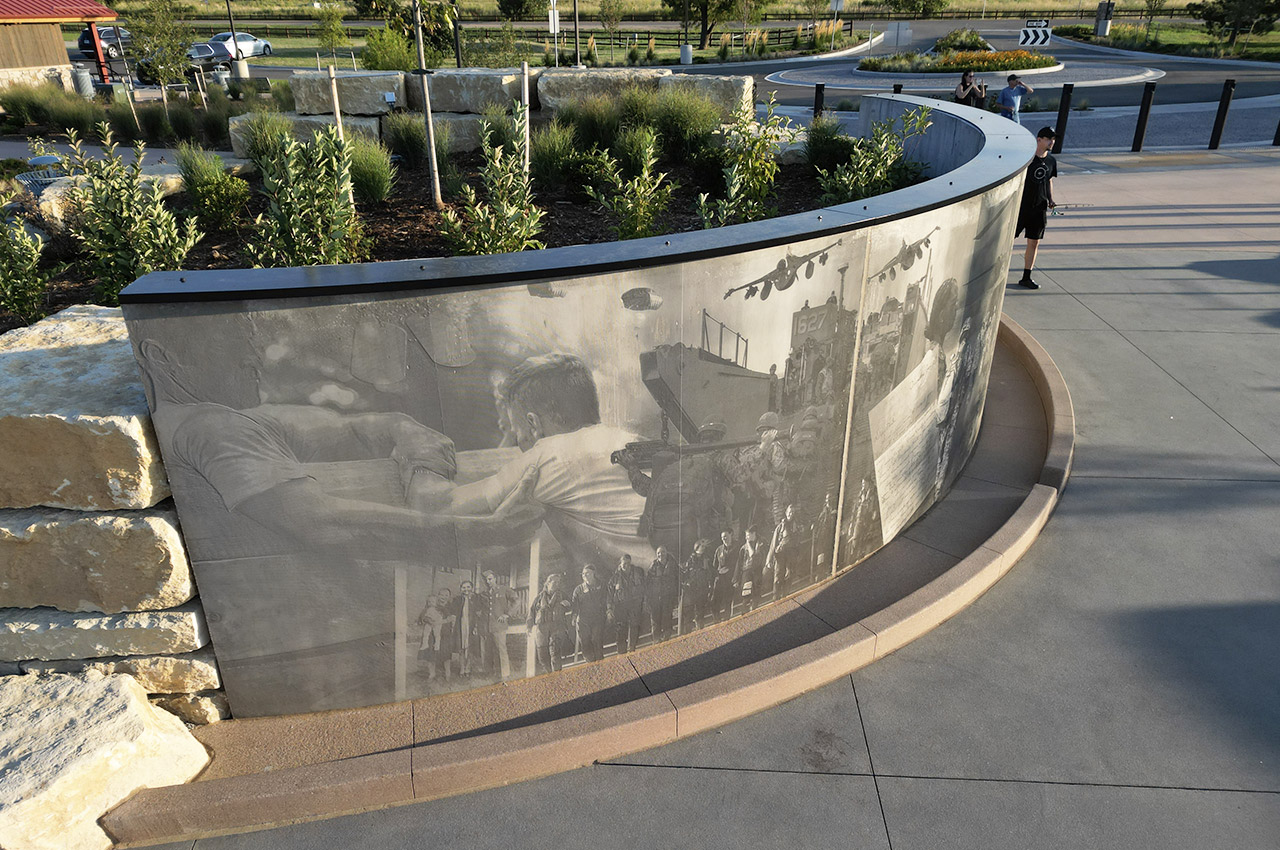
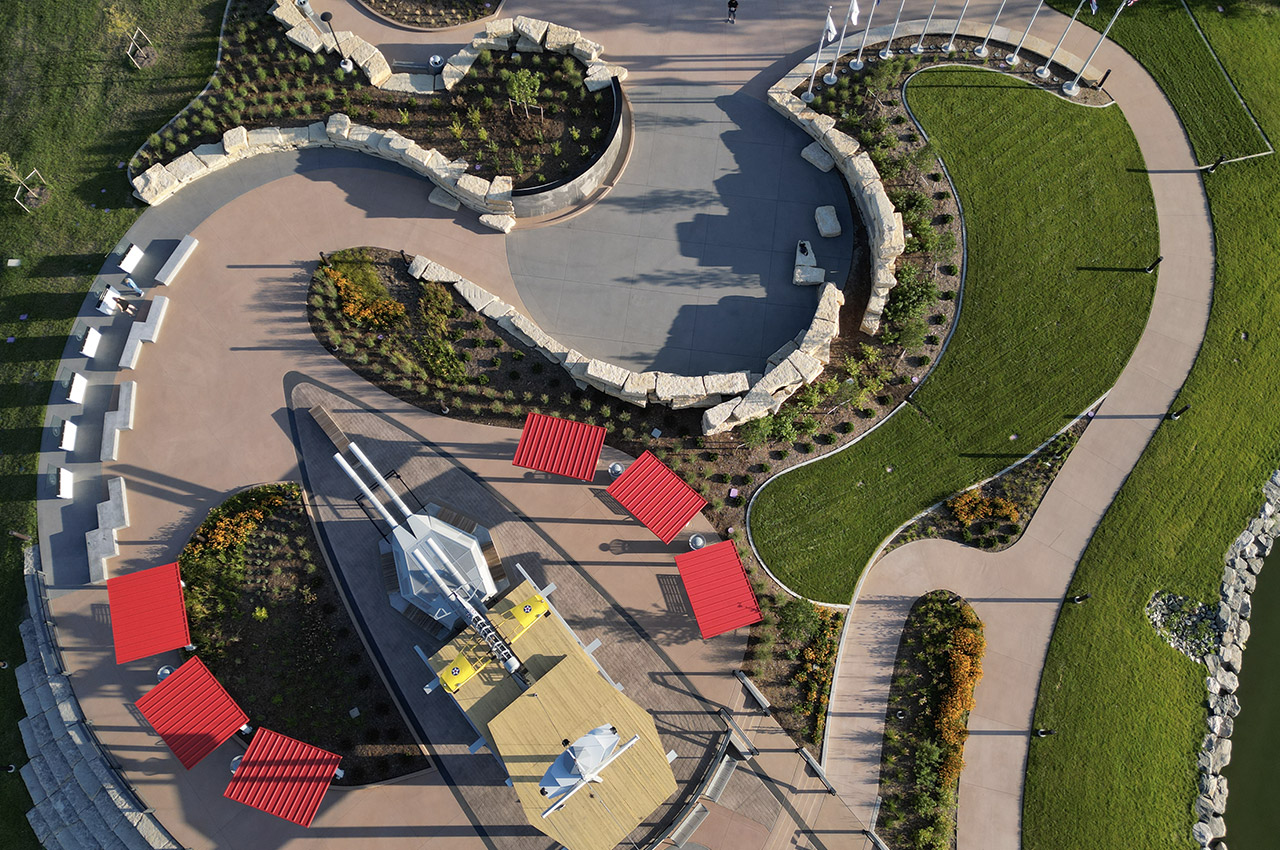
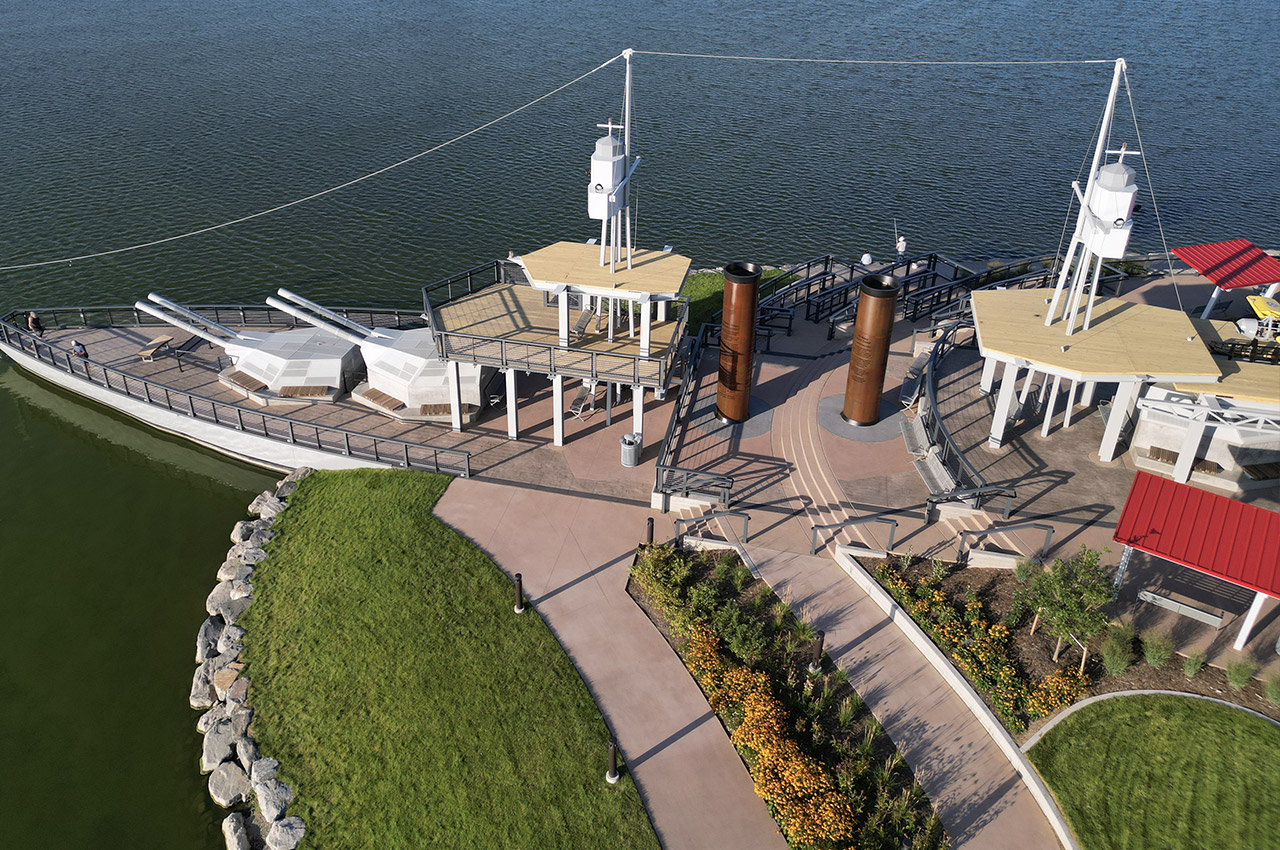
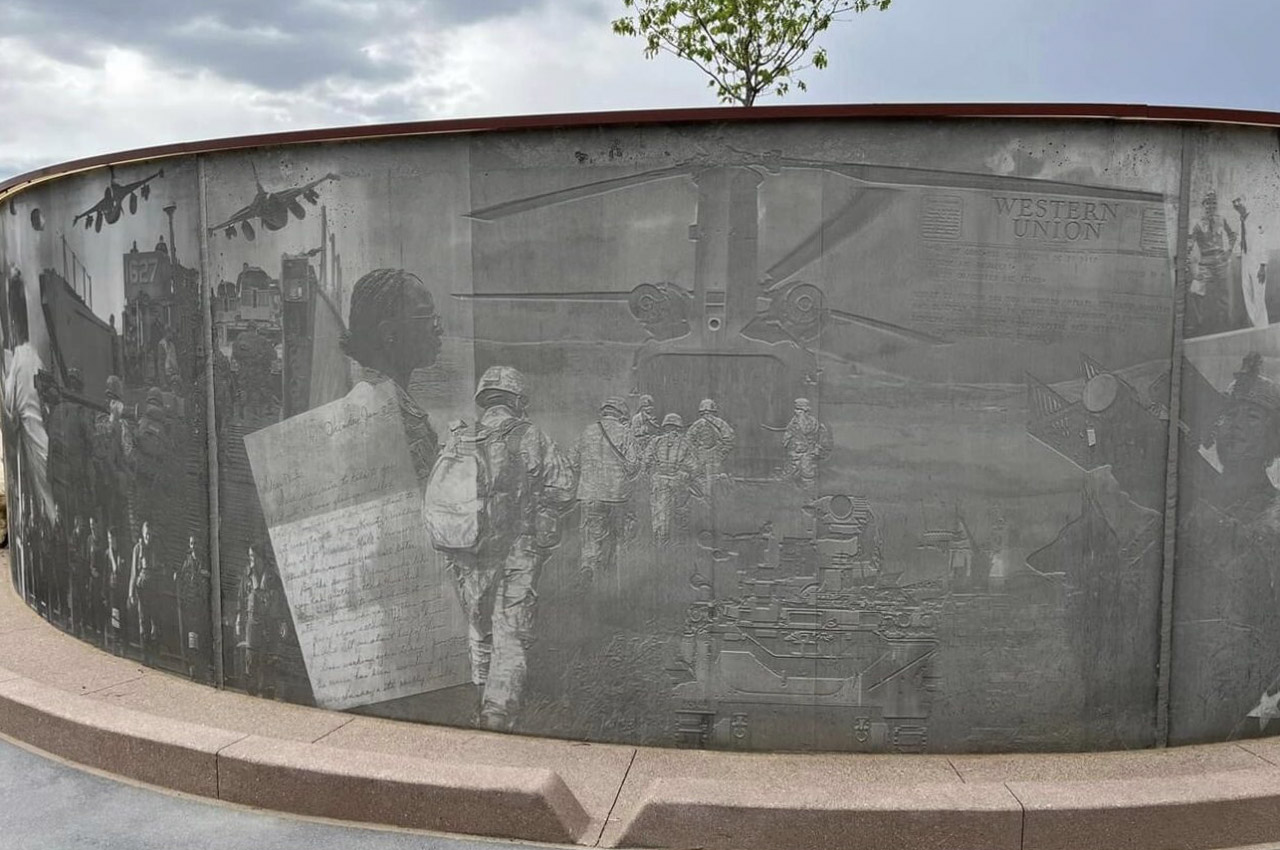
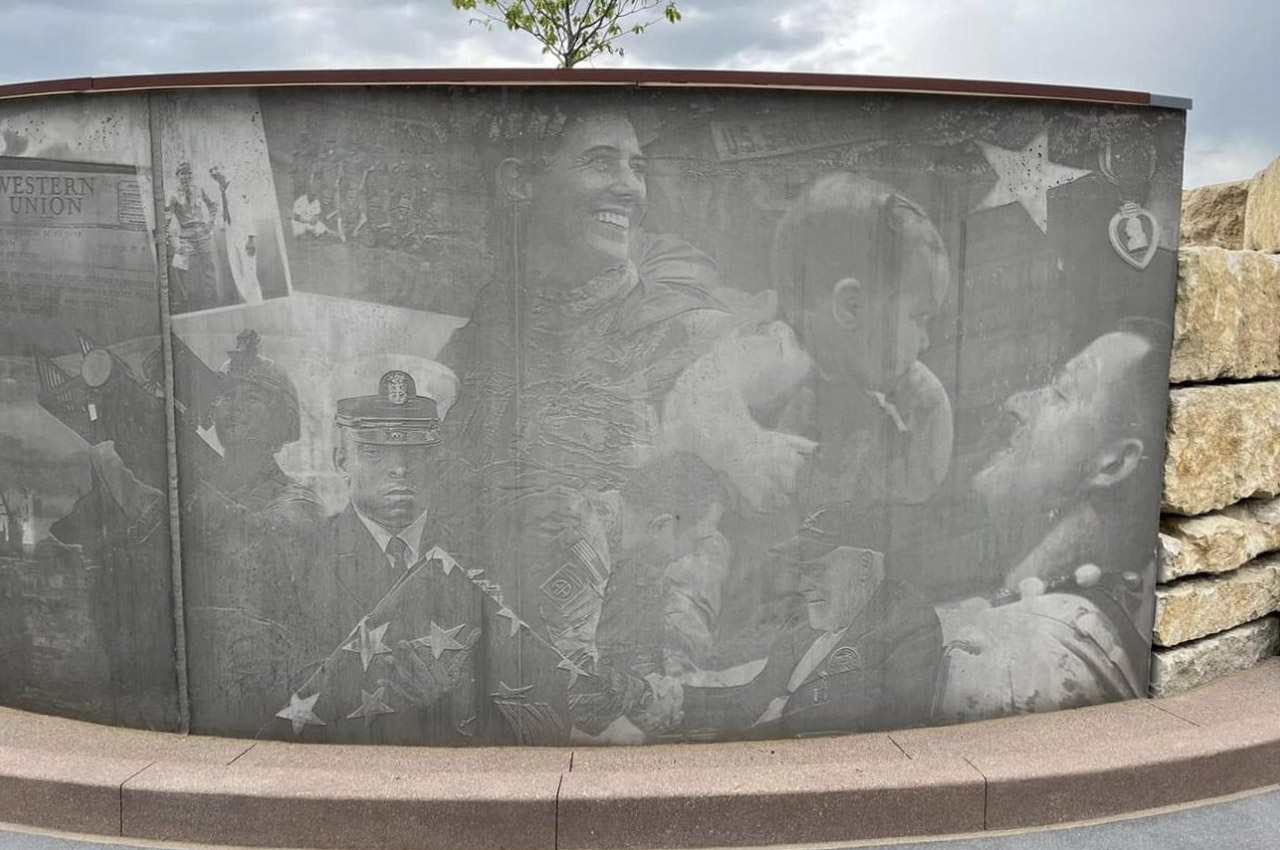

Scott System applied photo-etching techniques to develop custom urethane formliners capable of transferring the memorial’s imagery directly into cast concrete.
Image Conversion and CNC Milling: Greyscale source images were converted into variable depth maps, translating tonal values into physical relief. Scott System’s CNC equipment then precision-milled those depth variations into the formliner molds. Lighter tones became shallower relief; darker tones became deeper cuts. In the finished concrete, those depth differences produce the shadow and highlight variation that reconstructs the image under natural light.
Three-Panel Formliner System: The story wall required three separate urethane formliners, each contributing to a continuous surface spanning 34 feet in length and 7 feet in height. The formliners were engineered to bend around a 62-foot radius, maintaining smooth curvature across the full arc of the façade without distorting the imagery at the bend points.
Urethane Material Selection: Urethane was the right material for this application. It is flexible enough to conform to the curved geometry of the wall without cracking or losing surface detail, durable enough to withstand concrete placement, and precise enough to hold the depth resolution required for photographic imagery at this scale.

Custom Photo-Etched Urethane Formliners: Three panels, 34 ft. × 7 ft., engineered to bend around a 62-ft. radius
CNC Milling: Greyscale-to-depth-map conversion for photographic concrete relief
The Adams County Veterans Memorial story wall stands as a permanent tribute along the shore of Mann-Nyholt Lake, its concrete surface carrying photographic imagery and narrative scenes that emerge through shadow and light. The three-panel formliner system produced by Scott System delivered the image resolution, surface continuity, and curved geometry the design required, enabling Colorado Hardscapes to execute the installation with the fidelity the memorial demanded.
The project demonstrates what photo-etching technology makes possible in architectural concrete: not a reproduction of an image applied to a surface, but imagery that lives inside the material itself. For memorials, civic spaces, and any application where permanence and precision are both required, Scott System’s photo-etched urethane formliner process offers a reliable, production-ready path from photograph to cast concrete.