
Scott System
Scott System
Case Study

The Memorial to the Enslaved at the College of William & Mary honors those enslaved by the institution. Built with red range brick to match the historic campus, the structure features two sweeping cast-in-place concrete teardrop shapes that form the memorial’s architectural core.
The memorial houses 198 engraved black granite blocks identifying known and unknown individuals. Scott System was contracted by Universal Forest Products to engineer and fabricate the complex EPS foam formwork required to cast the signature teardrop concrete enclosures.

The memorial’s teardrop geometry is exceptionally difficult to cast. Conventional wood or steel formwork cannot achieve these large, continuously curving profiles without seams or dimensional inconsistencies that would compromise the structure’s visual integrity. The scale added further complexity: the two teardrop forms spanned up to 41 feet and required 37 total foam pieces. Every joint had to align perfectly on-site to create a single, seamless curved form across the entire assembly.
For this memorial, precision and surface continuity were essential requirements to honor its purpose.

The material selection is deliberate: red brick connects to the historic campus, black granite anchors the names of the enslaved, and cast concrete provides the structural framework that unifies these elements. To maintain this material harmony, the concrete required high-precision casting to ensure surface continuity across the expansive, multi-piece forms.
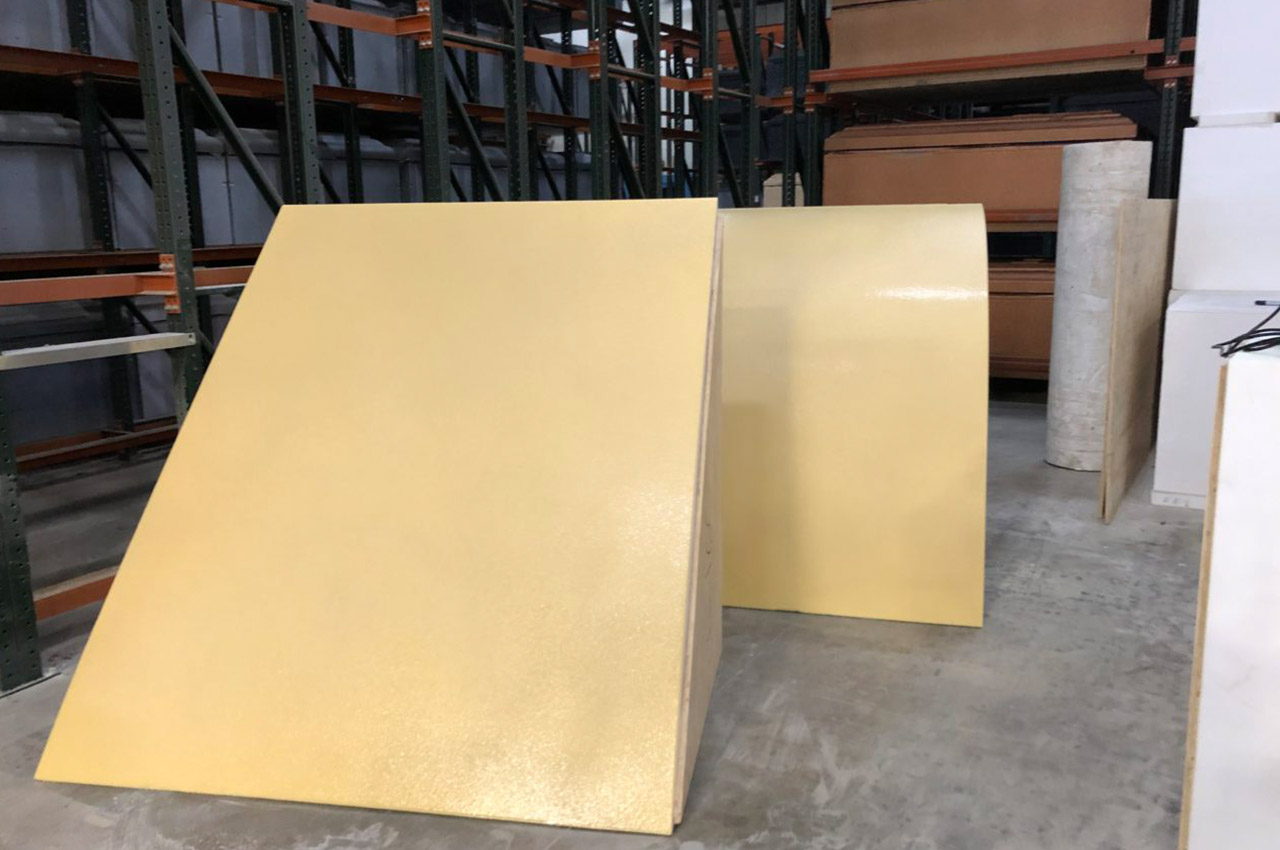
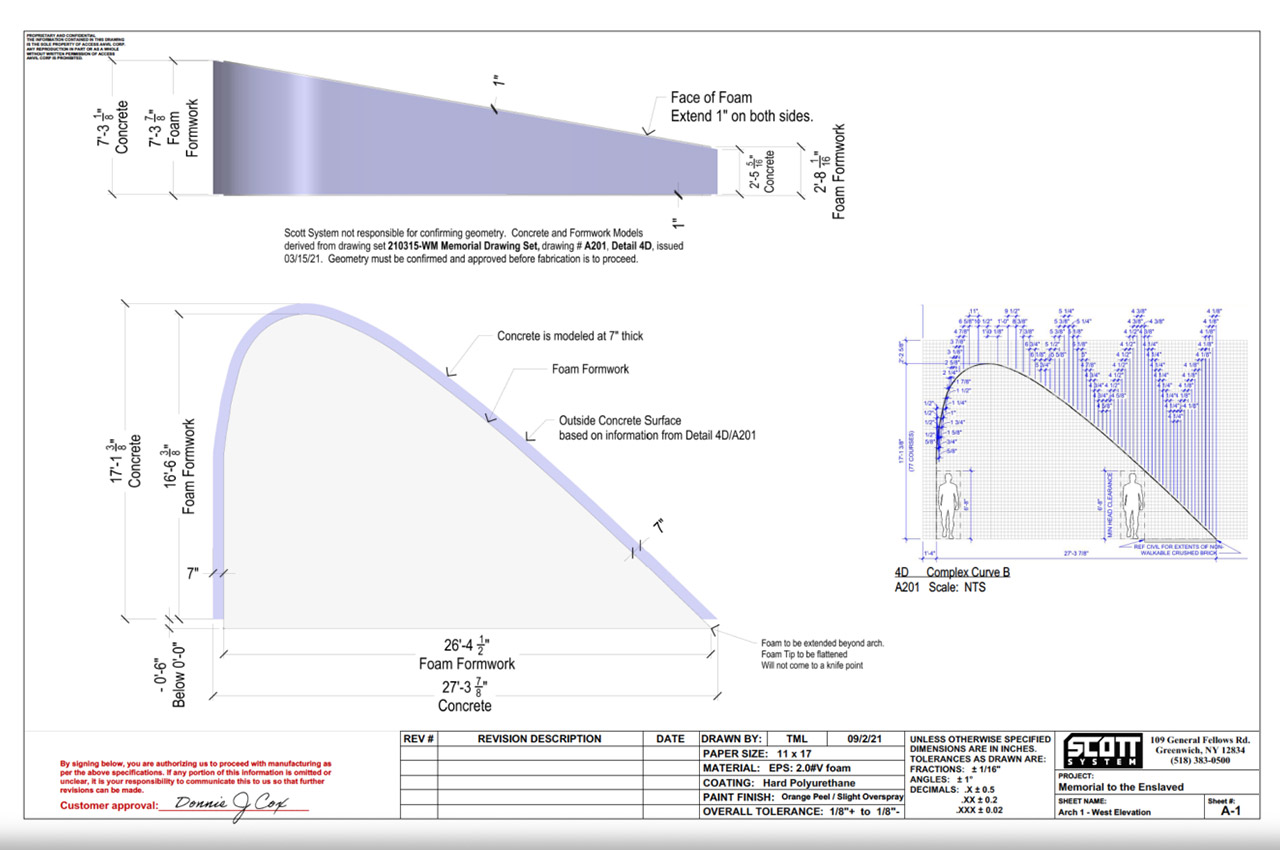


Scott System engineered and fabricated both teardrop assemblies using 2.0-pound-density EPS foam formwork with a polyurethane-coated concrete pouring face. All formwork was manufactured at Scott System’s facility in upstate New York and shipped to the Williamsburg job site for cast-in-place installation.

Custom EPS Foam Teardrop Formwork: 2.0# density; two assemblies: 41′ × 13′ at 20 pieces and 26′ × 16′ at 17 pieces.
Polyurethane Coating: Applied to all casting faces for surface protection and concrete fidelity.
The Memorial to the Enslaved at the College of William & Mary now stands as a permanent place of acknowledgment, featuring two seamless teardrop forms cast in concrete. Scott System achieved the sweeping, continuous curves required by the design using multi-piece EPS formwork assemblies. A total of 37 individual foam pieces were precisely engineered to become the two final architectural forms that enclose the 198 engraved granite blocks bearing the names of the enslaved.
Scott System was honored to contribute to this memorial, ensuring the formwork delivered the geometric accuracy and surface quality that reflected the project’s significance. Scott System’s EPS foam formwork engineering offers a dependable transition from design concept to final concrete realization for large-scale, cast-in-place projects requiring intricate curvatures, multi-segment construction, and uniform surface transitions.